


Rethinking the Pace of Horse Training: Why Slower Often Means Smarter

Updated:
December 12, 2025By Will Clinging
The timeline for training a horse varies widely—both between individual horses and the people working with them. In my experience as a trainer, I firmly believe that slowing down the process actually accelerates learning. Horses not only absorb information more efficiently, but they also gain confidence in the process. Confidence, or lack thereof, plays a major role in how steadily a horse progresses through training.
When a horse is sent out for professional training, there’s often a set timeframe in which noticeable results are expected. But is it reasonable to anticipate the same rate of progress when training your own horse? And perhaps more importantly, should that be the goal?
Some trainers can perform remarkable demonstrations, achieving impressive milestones in a single session. While this can be captivating to watch, many of these demonstrations are done with young, impressionable horses. In my own public sessions, I always point out that what may appear to be 90 minutes of rapid progress is often compressing weeks of foundational work. Although the horse may execute what's being asked in the moment, it's critical to understand that short-term performance doesn’t necessarily equal long-term understanding. In fact, pushing at that speed too often can result in the horse becoming mentally overwhelmed or disengaged.
I frequently observe riders becoming disheartened when their horse isn’t advancing as quickly as expected. I also see others glossing over key fundamentals just to achieve a certain manoeuvre. This often stems from pressure—internal or external—to replicate what they’ve seen a professional accomplish in an hour-long clinic or video. But lasting results come from layering understanding over time, not rushing for instant results.
Related: Turn Pushy Horses Around with Three Simple Lessons
Training a horse should take a lifetime. It is the continuous process of accepting and rejecting information that at times will be rewarding and other times, very frustrating. What is the rush to get your horse broke, and really what is a broke horse?
If you enjoy the exercise of training and encourage your horse to try to be a little better each day, one day he will do all you ask of him. If you employ coercive methods or overwhelm your horse with information, however kindly presented, the training will develop holes. The horse will learn only bits and pieces of everything you taught and there will be situations that he cannot reliably deal with.
Slowing the process down to a pace that is honestly achievable by you and your horse will usually produce longer lasting results. There should be no pressure to teach your horse things at the same pace as any other trainer. Enjoy the training process for what it is. Remember that improvement is just that: improvement. Be encouraged by the little things your horse does for you.
Every maneuver a horse performs for us has several parts. If the parts are taught slowly and correctly, when they are assembled the maneuver as a whole will take care of itself. If the polished maneuver is not working, correcting the maneuver itself will not fix it. It is one or more of the parts that is not working and therefore cause the finished product to be less than perfect. When the maneuver is taught too quickly, the horse’s confidence will suffer. A horse that lacks confidence will continue to be incorrect. Allow the horse to feel good about accomplishing something. Lowering your expectations may encourage your horse to continue trying, and a horse that tries is a horse that will learn. If things are too difficult because the end result is more important than the process, your horse might quit. When things are never good enough, the horse can get discouraged and start to make more mistakes. Rushing your goals will make those goals unrealistic. Unrealistic goals will become unattainable.
When you are training your horse, take the time to evaluate his progress. Is he better than he was? Is he worse than he was? Either way, you must take responsibility. Are you discouraged by his lack of progress or pleased with his effort? If you can keep your approach slow and steady, you are more likely to be satisfied with slow and steady progress. If you want it all right now, there are not too many horses out there that will satisfy you. Enjoy the process!
Related: Understanding the Confused Horse
Related: Riding the Green Horse: What to Do When Things Go Wrong
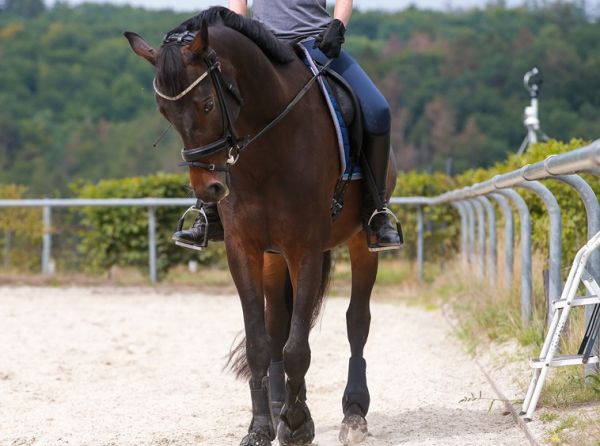
Photo: iStock/Anjajuli

Blogs & Podcasts

Articles by Trainer
Advertisement

Related Articles





Advertisement

Featured Stories



Advertisement