

Horseback Riding in the Canadian Backcountry: Are You Truly Prepared?

Updated:
April 2, 2026By Christian McEachern
Over the years I’ve spent working in the backcountry, one thing has consistently stood out: how often people head out with the mindset, “It’s just a short trip—I don’t need much.” My background spans time in the infantry, earning a Bachelor of Applied Ecotourism and Outdoor Leadership from Mount Royal University in Calgary, working as a professional adventure guide, and teaching Wilderness and Remote First Aid and survival skills. Alongside that, I’ve spent years as a horseman and now instruct Equine First Aid. Through all of this, I’ve witnessed significant changes in how people approach the backcountry.
Today, access to outdoor spaces is easier than ever for urban riders and weekend adventurers. Well-maintained roads lead deep into previously remote areas, high-end gear is widely available, GPS technology is commonplace, and there are manuals for nearly every scenario. While this accessibility has opened doors, it can also create a false sense of security. In reality, even a minor issue in the backcountry can escalate quickly, triggering a chain reaction of complications.
Picture this: it’s a warm summer afternoon—28°C, blue skies, and not a cloud in sight. You decide to saddle up for a quick ride into the mountains to visit a favourite spot. You toss on a light jacket “just in case,” mount up, and soon find yourself immersed in the quiet beauty of the forest, surrounded by the familiar sights, sounds, and scents of the wilderness.
Related: How To Go Horse Camping For Fun and Adventures
A few hours and some extra trails later – because you were enjoying yourself so much – you come across a mucky section of trail with lots of deadfall around you. Normally not a big deal, but today a moose comes out of nowhere on the trail in front of you. Your horse spins and bolts, knocks you off by a low overhanging branch, and gashes its front leg open on the sharp edge of a broken branch while running through the deadfall. You’ve landed on a fallen log and twisted your knee because your foot didn’t properly clear the stirrup. Your horse is gone.

The author with Charme, his 8-year-old Percheron/Thoroughbred mare who was rescued by Bear Valley Rescue at four months of age, and adopted by McEachern a month later. “While I love and have a connection with all of my eight horses, Charme is the horse I spend the most time with. She’s a gift.” Photo courtesy of Christian McEachern
The good news is that either your horse didn’t go far and he might come back, or he’s waiting for you at the trailhead if he knows where the trailer is. The bad news is that you’re about 15 km from the parking lot. For a normal person the walk of shame back to the parking lot would take almost four hours, plus you need to climb back up to the mountain pass from which you had previously been enjoying the view, so add another hour (based on Naismith’s rule of travel for humans at a walking speed of four km per hour, add one hour for every 1000 feet elevation gain). Except the problem is that you can hardly walk, and now that the adrenaline is settling down you realize your mouth is pasted shut from thirst. Of course, you’ll double check your cell phone for service bars, which aren’t there. You grab yourself a stick and slowly start heading back to safety.
Walking in cowboy boots on a rocky/uneven trail, it doesn’t take long for your ankles to feel like putty, and soon the blisters start forming on your feet, sending shards of sharp pain every step you take. You finally see some water, but it’s the local cattle’s summer watering hole with lots of manure visible in and around the water… so you pass and wait for a cleaner source of water. The sun is now baking your head, and your thirst is so bad you can hardly swallow, and you haven’t even started up the mountain yet. As you work your way back up to the mountain pass in the heat, a massive headache kicks in, and suddenly you feel nauseous and everything starts spinning from heat exhaustion and dehydration setting in. You find a small tree with a sliver of shade and decide to take a rest. Time passes quickly in your weakened state and the hot sun drops in behind the mountain. There may be hours of daylight left, but the chill quickly sets in as you sit there resting and realize you’re not going to make it back before dark.
There are a million variables. Your horse comes back and you manage to limp your way out. Another rider-hiker-mountain biker finds you. You stumble upon a crystal clear mountain creek. Or it could get worse and start raining or snowing – yes, I’ve been snowed on in July – but that’s not the point. I’m not saying you need to have everything with you, but you need to think: What if? With some basic survival items most of the life-draining scenarios can be avoided.
Related: How to Prepare Rider, Horse and Gear for the Trail
You need to have, at a minimum, a knife or multi-tool and a lighter or waterproof matches on your person in case you get separated from your horse. In the summer I also use a hydration camel water pack with water purification tablets in a pouch on my back. At a minimum, with these items I can build a fire, make a shelter if needed, and collect and purify water for hydration.

In case you become separated from your horse, carry on your person a knife or multi-tool (Leatherman and case shown), a lighter or waterproof matches, and water purification tablets. With these items you can purify water for hydration, build a fire, and make a shelter if needed. Photo: Christian McEachern
In my small saddle horn bags I always carry a small equine first aid kit with one side containing two rolls of Vetrap™, cotton padded wrap, a hoof pick, and duct tape (which doubles as something to help keep your shelter together). On the other side the survival kit contains two survival blanket wraps, a fire starter kit, water purification tablets, toilet paper, triangular bandage, high absorbency trauma dressing, and a small human first aid kit. In one of the outside pockets with easy access I carry a pen flare kit with bear bangers and multi coloured flares.
Related: Horses with Jobs: Pack Horses

In your saddle horn bags, always carry the items you’ll need to stay safe in the backcountry if your ride does not go as planned. The following items are a basic set up. You can add high energy snacks, water purification tablets, trauma scissors, tweezers, and whatever else you need to prepare for the unexpected. Photo: Christian McEachern

Vetrap™, hoof pick, duct tape, padded cotton bandage roll. Photo: Christian McEacher

Triangular bandage with safety pins, two survival wrap blankets, toilet paper, a pen flare with red, white, green flares, two bear bangers, and a lighter with fire starter stick. Photo: Christian McEachern

Your small human first aid kit should include high absorbency trauma dressing, triangular bandage with safety pins, gauze pads, alcohol prep pads, iodine solution, sting relief, sunblock sunscreen, scissors, one way breather mask (for CPR), rubber gloves, Band-Aids®, Tensor™ bandage, and first aid tape.
I also never leave home without my trusty GORE-TEX® jacket, a toque, and some gloves even when it’s hot. It doesn’t take long for the weather to turn nasty in our beloved Rocky Mountains. It’s important to take extra precautions to keep your stuff dry. Heavy duty Ziplock® bags work great, and if it’s really important (toilet paper, fire starter kit) double bag it. Trust me on this one… there’s nothing like needing something and it’s soaked! Also, keep your tack in good repair and constantly check important leather straps for cracking or wear.
So to wrap up, it doesn’t take much to be able to survive… if you have properly prepared yourself and your equipment. Always tell someone where you are going and your expected return time, and if going for longer than a day leave a brief itinerary on your windshield. You should also try to ride with other people, however, sometimes that’s not possible with everyone’s busy schedules these days.
Most rides will go off without a hitch, but what about the one that doesn’t go so well? As a professional guide, I always say: It’s not a question of if, but when.
Related: Prepare for Trail Riding Season: Plan, Build Fitness, Sharpen Skills
Related: Solo Horse Packing Adventures in Canada's Southern Rocky Mountains
About Christian McEachern

Christian’s experience began with years with the Canadian Infantry. After earning his Bachelor of Applied Ecotourism and Outdoor Leadership degree at Mount Royal University in Calgary, he became a Professional Adventure Guide and a Wilderness and Remote First Aid/Survival instructor. A dedicated horseman, Christian is also an Equine First Aid instructor.
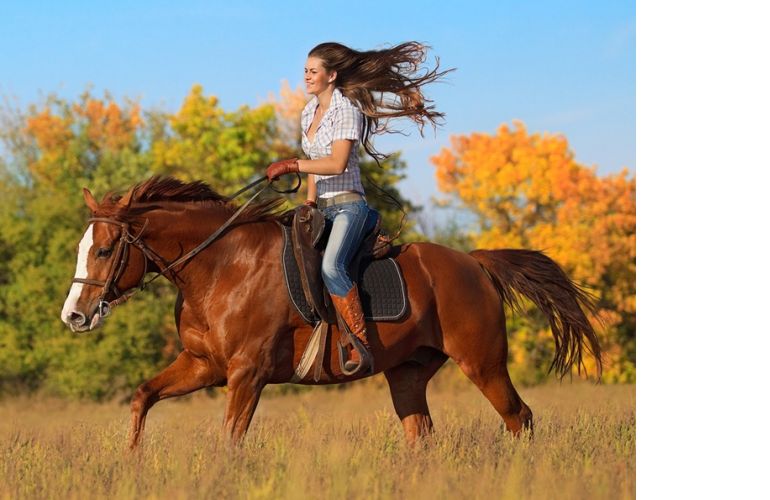
Main photo: ©Shutterstock/CustomPhotographyDesigns

Blogs & Podcasts

Articles by Trainer
Advertisement

Related Articles


Advertisement

Featured Stories



Advertisement