

What Is Equine Chiropractic and How Does It Work?
Updated:
February 6, 2026Source: UC Davis Center for Equine Health
Equine chiropractic care is a manual therapy that concentrates on the horse’s musculoskeletal system, with the goal of identifying, addressing and helping to prevent physical issues that may influence overall well-being. Treatment involves the delivery of carefully controlled, targeted pressure to specific areas of the body — most commonly along the spine — to stimulate a corrective response. The primary aim is to support smooth, coordinated movement throughout the spinal column, thereby enhancing neuromuscular function within the spinal joints.
During an assessment, an equine chiropractor looks for joints that are not moving as freely as they should. The phrase “out of alignment” is often misunderstood and can be misleading. In most cases, the joint has not shifted out of position but is instead limited in its normal range of motion. Chiropractic adjustments are designed to address these motion restrictions and restore proper mobility. When joint movement improves, inflammation is reduced and pressure on nearby nerves and soft tissues is eased. Much like interference on a phone line disrupts a clear signal, inflammation can hinder nerve communication. Because the nervous system — including the brain and spinal cord — regulates all bodily functions, improving signal transmission can have far-reaching benefits for overall health.
As chiropractic treatment centres on the spine, it is commonly described as “spinal manipulative therapy” and can serve as a beneficial component of a well-rounded equine healthcare programme.
Related: Professionalism in the Horse Industry
Related: Non-Veterinarian Equine Professionals May Leave Horse Owners Vulnerable
What to expect during a chiropractic appointment
During the exam, the doctor will carefully palpate your horse’s joints and check their range of motion, which is commonly referred to as “motion palpation.” Particular attention is given to each joint in the spine, but limbs are also evaluated. When a restricted joint is identified, it is corrected by an adjustment, which is a very specific and gentle thrust into the joint. After the adjustment, the joint is palpated again to be certain that it is moving more freely. The adjustments usually look like quick little pushes on the animal. In order to be at the correct angle to the spine and to be high enough above the horse, the doctor will stand on a block. Most animals are relaxed during their appointment. Sedation is not required and is often undesirable, since it will interfere with the ability of the nervous system to respond to the treatment. Most adjustments in horses take between 15 and 30 minutes.

Photo: Dr Dennis Eschbach/Wikipedia
Acupuncture and chiropractic treatment complement traditional lameness evaluation
Acupuncture and chiropractic (AP/C) evaluation and treatment are not a substitute for a thorough lameness diagnostic evaluation, because many horses have musculoskeletal issues that are identified and managed with traditional approaches. Most practicing equine veterinarians have not been educated or trained in procedures to perform a thorough functional biomechanical evaluation of the equine spinal column and joints. Consequently, horses with lameness issues not diagnosed readily using traditional methods, or with suspected concurrent neck or back pain, are good candidates for referral for AP/C evaluation. Veterinary chiropractic and acupuncture treatments are not meant to replace traditional veterinary medicine, and instead work best when integrated with traditional approaches.
Common symptoms of horses presenting for acupuncture and chiropractic treatment include the following:
- Poor performance
- Lameness or stiffness
- Back, neck, or tail pain
- Abnormal posture, or changes in posture or topline
- Discomfort when saddled (cinchy, girthy)
- Difficulty bending to one side
- Reluctance to pick up a lead, inability to maintain a lead, and cross-cantering
- Traveling with a “hollow topline” (head and neck elevated and with a back hollow)
- Hesitating to do things they normally do, such as picking up feet, stepping down out of a trailer, turning in either direction, and jumping
- Difficulty engaging the hindquarters or traveling in a long-and-low frame
- Holding the tail abnormally
- Head tilt, or difficulty chewing
- Uneven muscle development
- Uneven pelvis or hips
- Difficulty flexing at the poll, or pulling on one rein
- Difficulty getting up and lying down
- Muscle atrophy
- Changes in behaviour or attitude
Related: The Growing Role of Acupuncture in Horse Care
Related: When Horses and Riders Hurt Themselves
Printed with the kind permission of the UC Davis Center for Equine Health. The UC Davic Center for Equine Health is dedicated to advancing the health, welfare, performance and veterinary care of horses through research, education and public service.
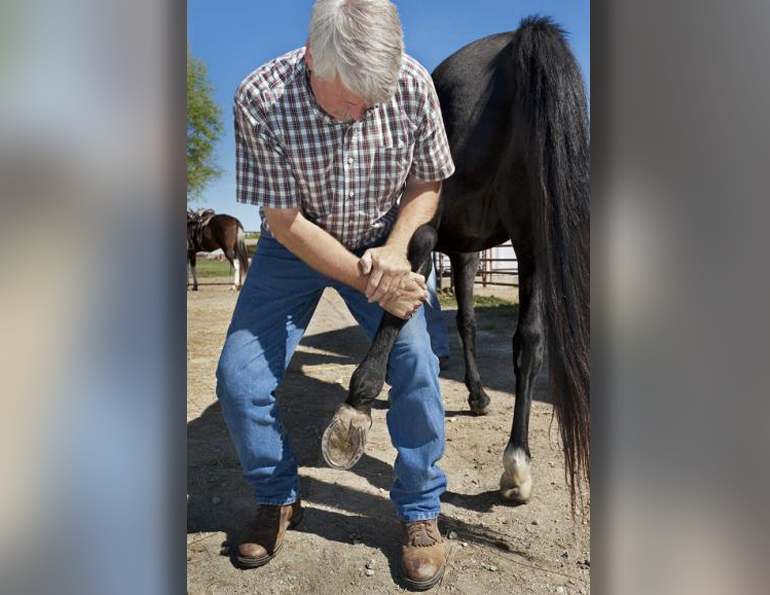
Main Photo: A chiropractor checks joint alignment on an equine patient. Horses with lameness issues not diagnosed using traditional methods are good candidates for chiropractic evaluation. Credit: iStock/Medical Occupation

Blogs & Podcasts

Advertisement

Related Articles




Advertisement

Featured Stories




Advertisement